
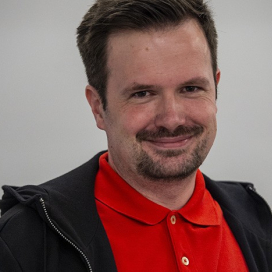
Marko Šamšalović, Head of Sector - Service Management
"In 2014, I joined the European Commission as a team leader in the IT department of the Directorate-General for Taxation and Customs Union (TAXUD). In that role, I led a team of four great colleagues with whom I managed seven trans-European customs projects.
It was very gratifying to see the systems we had developed being used throughout the European Union and beyond. I was also very happy to participate in various customs-related negotiations between the EU and non-EU countries, including Serbia, Montenegro, China, Russia and Japan.
Since 2019, I have been the head of the service management sector in the Directorate-General for Informatics (DIGIT). My job is to lead a team of over 65 professionals who provide support to users of the European Commission’s corporate systems.
I like working in DIGIT very much because I have wonderful and professional colleagues who are always ready to help me as well as others, if needed. They are so good at what they do that there is no problem they cannot solve. My sector’s team leaders are both good managers and experienced IT professionals and make it easy for me to coordinate complex assignments."
Head of Sector – Service Management, Directorate-General for Informatics (DIGIT), Solutions for Legislation, Policy & HR, European Commission
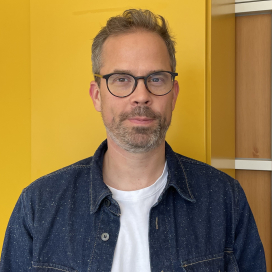
Alexander, Eurostat
"What do you work on?
Hi, my name is Alexander, and I work on labour force statistics.
In simple terms, we analyse household survey data from one of the longest-running surveys in Europe. Our aim is to make sense of this data and provide Europe with reliable statistics, analyses and tables on employment.
What do you enjoy most about your job?
There are a few things I really enjoy about my job. First, the data is real and has a real-world impact, which I find very rewarding. I also get to geek out about statistics, which is great!
On top of that, I work with amazing colleagues who are always willing to help. It’s a great working environment, and I would definitely recommend it.
What is your top tip for someone considering applying for the competition?
I have a few pieces of advice. First, treat the competition like a marathon rather than a sprint. Preparing takes time, and you need to study consistently over the long term. I know this from experience because I went through the process myself.
It can be a demanding process, so don’t take setbacks personally. There are plenty of useful learning resources available, for example, on the EPSO website.
And most importantly, enjoy the process, keep practising and remember that learning is a work in progress.
Good luck!"
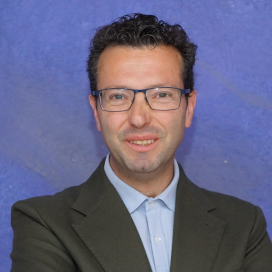
Domingo, Eurostat
"What do you work on?
Hi, I’m Domingo, and I work at Eurostat, the statistical office of the European Union. I’m Deputy Head of the unit responsible for population and migration statistics, as well as Deputy Chair of the Task Force on Housing Statistics.
Our work involves producing essential data on key societal issues, including migration, housing and structural challenges such as an ageing population.
What do you enjoy most about your job?
What I enjoy most about working for the EU institutions is the opportunity to make a difference and have a real impact.
At Eurostat, for example, we provide essential data that informs public debate and supports evidence-based policymaking.
Another aspect I really value is working with highly skilled and knowledgeable colleagues from diverse backgrounds. There is always something new to learn from them, which is very important to me.
Finally, I appreciate the opportunities that working for the EU institutions offers to grow professionally, develop new skills and advance in my career.
What is your top tip for someone considering applying for the competition?
My advice is to read the annex to the Notice of Competition carefully and relate its contents to relevant documentation, such as EU legislation, EU policy documents and other materials relevant to the EU context.
Good luck!"
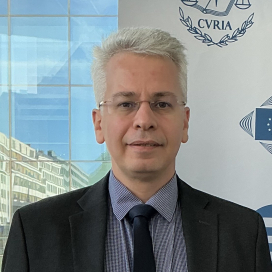
Richard, European Parliament
"Hi, I am Richard, I work in the Library Reading Room Unit in the Directorate for the Library and Knowledge Services, which is part of the European Parliamentary Research Service (EPRS).
In my daily work, I use a range of library systems and applications, including the software behind the Library catalogue and the tools used to manage our collections of books, electronic publications and other resources.
I also use tools for communicating with users, including websites, intranets, wikis and internal newsletters. We use specific tools to deliver training and promote the Library's services, while colleagues also work with specialised systems for acquisitions and cataloguing.
An important part of working in a modern library is being able to adapt and learn new tools and systems. At the same time, you always have to keep the needs of the user in mind.
2. What do you enjoy most about your job?
I would say the variety. I play a small role in helping the parliamentary community to work as effectively as possible.
My work can range from working at the Library's front desk and answering enquiries, to organising events in the Reading Room, delivering training courses, working with statistics, and welcoming researchers and visitors to the Library.
There is also a lot of communication and cooperation with colleagues. What I enjoy most is that the job is ultimately about serving the parliamentary community and helping Members of the European Parliament, their offices and Parliament staff to have access to the best possible information and sources.
3. One tip for someone considering applying for the competition
Just one? ? I can focus on Field 2 on librarianship and information science I would say: familiarise yourself with the terminology and the work of modern libraries.
Look at the websites and catalogues of the EU institutions, including the joint catalogue, and try to understand the different services they provide.
Most importantly, read the Notice of Competition very carefully and make sure you understand exactly what experience is required. When preparing your application, present your supporting information as clearly as possible and highlight the parts of your professional experience that are directly relevant to library work."
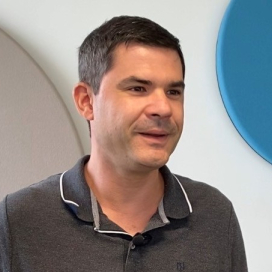
David, European Commission
"What do you work on?
Hi, I am David, Head of Sector for Cybersecurity Operations in unit DIGIT.S02.
Our unit is responsible for defending the European Commission against cybersecurity threats. This means we are primarily focused on incident response, threat detection, intelligence, and all related technical activities. Additionally, we provide crisis management, communications, and legal support whenever required.
What do you enjoy most about your job?
What I enjoy most is the people I work with. Over the years, the unit has grown significantly. We have onboarded many new colleagues bringing diverse cultures, varied skill sets, and complementary expertise which is truly the core strength of our team.
On a personal level, I’ve had the chance to lead and participate in many different activities over time. No two days are ever the same, every day brings a new challenge, and you never get bored.
What is your top tip for someone considering applying for an EU competition?
My first piece of advice is simple: Apply!
To prepare effectively:
Familiarise yourself with the process: Look closely at the competition structure and the type of questions asked so nothing comes as a surprise.
Understand the institutions: Research what the EU institutions are doing, the specific topics they focus on, and the day-to-day activities expected in the role.
Network: Try to reach out to people already working here. In general, colleagues are very open and happy to share their experiences."
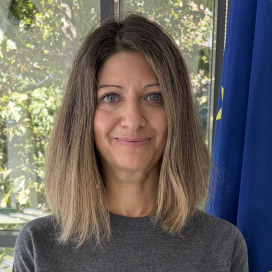
Elena, European Ombudsman
"What do you work on?
Hello, I am Elena, Artificial Intelligence Officer at the European Ombudsman.
The European Ombudsman investigates complaints against EU institutions.
If you're wondering what an AI Officer does, my daily task is to explore how AI can genuinely help our work and make us more efficient.
I work at the intersection of ICT, policy, law and fundamental rights.
This is something that one person cannot do alone. We have a cross-service AI task force where we meet and pull our resources. We scout for the best solutions to address the challenges our colleagues face.
What do you enjoy most about your job?
What I like most about my job is, first of all, that the tasks are completely new and sometimes uncharted.
You must find solutions to problems without a specific template because nobody before you has had to deal with them.
I also love working for a small institution because I have access to everybody, we can all work together, and you can see how a project develops from A to Z, rather than being involved in just one part of it.
What is your top tip for someone considering applying for the competition?
If I can give you one tip about this competition, it is to treat it like a marathon, not a sprint.
Be very diligent, focused and disciplined, and prepare every day if you can.
If you're an expert in this field, do not hesitate to apply.
The EU is where everything is happening at the moment, and it's a very exciting place to work and to take cybersecurity and AI to the next level."
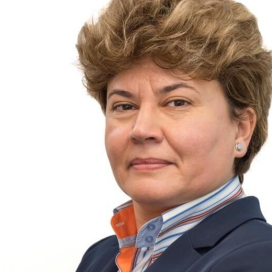
Liliana, Council of the European Union
"What do you work on?
Hello, I’m Liliana, Head of Cybersecurity and Governance at the General Secretariat of the Council of the European Union.
We use a wide range of cybersecurity frameworks, methodologies and tools. We’re also leveraging the power of AI to support our teams by automating repetitive tasks, filtering alerts and significantly speeding up threat detection.
What do you enjoy most about your job?
What’s most rewarding about working within the EU institutions realm, is knowing that we’re protecting the greater good and doing it alongside a like-minded community never in isolation.
I love empowering my team to find their own path, whether they’re technically or policy-focused, and helping them grow to deliver their absolute best.
One tip for someone considering applying for the ICT competition
My advice to you? Connect with our people. In an interconnected world, you can instantly find our cybersecurity professionals, so use your time to reach out to them. They are our best asset and are ready to share insights with you, so you can discover why you might want to join us.
And to all the girls and women out there: don’t be shy. Please apply! We need you!"

Ann, European Commission
What do you work on?
"Hello, my name is Ann. I work in the Directorate-General for Digital Services at the European Commission, in the Cybersecurity Directorate, where I lead the CyberAware team for the entire Commission. It is the program that takes care of the human factor in cybersecurity.
With CyberAware, we cater to all our colleagues because we see them as the first line of defense for the Commission, they help us keep the Commission secure. We do this by training them and providing targeted briefings for Commissioners, VIPs, system owners, and technical profiles, adapting every training to their specific context."
What do you enjoy most about your job?
"No two days are the same, and I love that variety. The cybersecurity threat landscape changes constantly, and so does our work: from communications to training.
What I enjoy most, however, is interacting with colleagues and helping them upskill in cybersecurity. I love working through networks of people to spread key messages and seeing that shift when they realize why their role is vital in protecting the Commission."
One tip for someone considering applying for the ICT competition:
"My golden tip: believe in yourself and apply! And of course, prepare well! We need you as a cybersecurity expert in the European institutions."
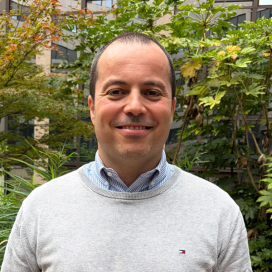
Juan, Council of the European Union
What do you work on?
"Hello, my name is Juan and I'm working in the Product and Service Development Unit at the General Secretariat of the Council. My focus is managing data and AI projects, and we are currently building a new data and AI platform for all Council staff. It's an exciting project where you never stop learning new things every day, the data and AI fields are changing so quickly that you're always on your toes, and this is really motivating for me."
What do you enjoy most about your job?
The multicultural environment is fantastic! You get to connect with people from all over Europe and learn from their experience, and honestly, it feels like a family here. The Council really understands the importance of work-life balance, especially with flexible working arrangements. There are also great opportunities for career development, you can even change jobs within the EU institutions if you fancy a new challenge. In my case, I started in an agency, then moved to the European Parliament for a couple of years, then to the European Commission, and in 2024 I arrived at the Council."
One tip for someone considering applying for the ICT competition:
My one tip for you is: start preparing now! Seriously, don't leave it for the last minute. A little bit every day, a couple of hours, makes a huge difference. Also, dive into the EPSO website, check the competition notice carefully, look at past competitions for inspiration, and review previous test examples. And if you have the opportunity to connect with previous candidates who've been through the process already, do it! They'll give you some insider tips.
Good luck!"

Dominik, Social media coordinator (European Commission)
“Europe is a beautiful idea - but it needs to become a shared feeling. Today, there is no more powerful way to reach people emotionally with our common values, projects, actions, and policies than through the creativity, interactivity, and flexibility that social media offers.
It has long been my dream to help EU institutions connect with citizens through social media - to bring Europe closer to their hearts and minds. Participating in an EPSO competition allowed me to make that dream a reality.
Today, I coordinate the social media work of the Commission’s Representations and provide editorial leadership across our network.”